Skip to content
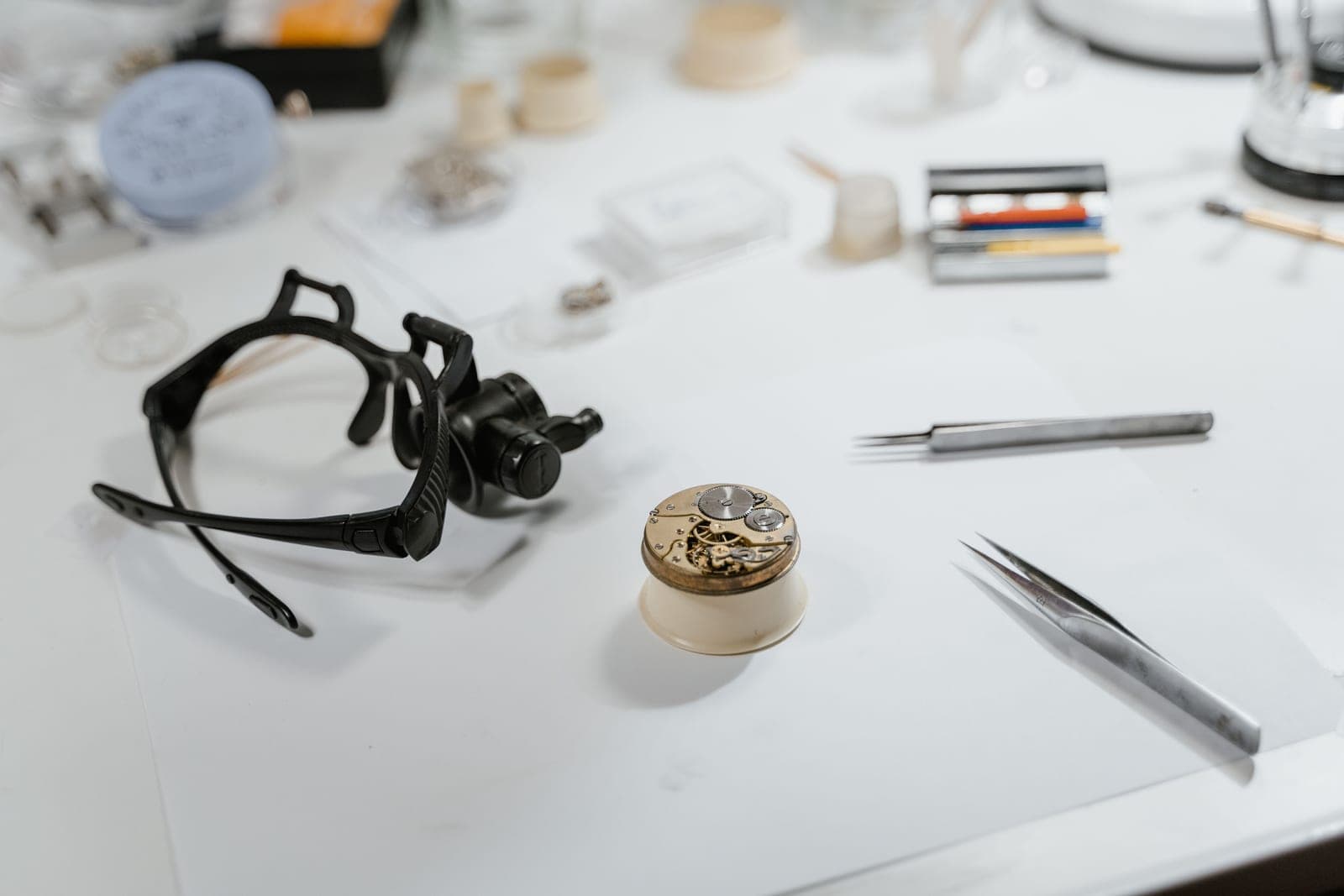
A watch movement partly disassembled on a repair bench

Hand-wound vs automatic

Hand-wound vs automatic

Same mainspring, same balance, same service. One adds a rotor so you never wind it; the other leaves it out and gets thinner and simpler for it.

By Sawyer V. · Published

The short answer

Hand-wound is mechanically simpler — no rotor, fewer parts and a thinner case. Hamilton's Khaki Field Mechanical is 9.5mm thick against 11mm for the automatic version of the same watch. The trade is winding it every day or two, and with an 80-hour reserve even that is generous.

Every automatic watch is a hand-wound watch with one addition: a weighted rotor that spins as your wrist moves and winds the mainspring for you. That addition is the only difference, and it has consequences in both directions — convenience on one side, thickness and complexity on the other.

Hamilton makes the cleanest comparison possible, because the Khaki Field comes both ways in the same 38mm case: the Khaki Field Mechanical with the hand-wound H-50, and the Khaki Field Auto with the automatic H-10. Both run 80 hours. Both have sapphire. The differences below are the rotor and nothing else.

The same watch, both ways

Both from Hamilton's own product pages. The water ratings differ between the two models; the rotor is not the reason.
Khaki Field Mechanical (hand-wound)Khaki Field Auto (automatic)
MovementHamilton H-50Hamilton H-10
Power reserve80 hours80 hours
Case38mm38mm
Thickness9.5mm11mm
Lug-to-lug47mm47mm
Water resistance50m100m
Daily routineWind every day or twoNone, if worn daily
CrystalSapphireSapphire
Both from Hamilton's own product pages. The water ratings differ between the two models; the rotor is not the reason.

On prices: we publish no figure we have not verified today, so every buy button reads "Check price on Amazon". Tier placement is our structural judgment, not a price claim.

How we picked

We have not worn these watches. What follows is what we checked instead, on documents you can open yourself — the same criteria, in the same order, on every roundup on this site. The full method is on the methodology page.

  1. 01Parts count

    An automatic adds a rotor and its winding train. Fewer parts is fewer things to wear, lubricate and fail.

  2. 02Thickness

    The rotor sits on top of the movement. Removing it is how the thinnest mechanical watches get thin.

  3. 03Daily routine

    An automatic winds itself on the wrist. A hand-wound watch asks for thirty turns of the crown every day or two.

  4. 04Power reserve

    Matters more on a hand-wound watch. 80 hours means a wind on Friday lasts until Monday.

  5. 05Service

    Both are full mechanical overhauls at the same interval. The automatic has more to clean.

Disclosure · Some links below are Amazon affiliate links. If you buy through one we earn a commission at no extra cost to you. It does not decide what goes on this page or in what order — here is exactly how that works.

Quick picks

Ranked on the Keep Score below — six published specifications, weighted identically on every page. The last row is the one we would not buy.

#WatchBest forKeep ScorePrice
1

Hamilton Khaki Field Murph 38mm H70405130

The H-10 automatic, 80 hours, sapphire, 100m, 11.1mm thick.

An automatic you never have to think about8.6/10
Check price
2

Hamilton Khaki Field Auto 38mm H70455533

H-10 automatic, 38mm, 11mm thick, 47mm lug-to-lug, 100m.

The automatic twin of the hand-wound watch below8.6/10
Check price
3

Hamilton Khaki Field Mechanical 38mm H69439931

Hand-wound H-50, 9.5mm thick, 80 hours, sapphire.

The simplest good mechanical watch there is8.1/10
Check price

Hamilton Khaki Aviation Pilot Pioneer Mechanical H76419931

A lovely hand-wound RAF reissue — with a mineral crystal.

Skip this one

Nothing, among hand-wound watches worth keeping7.1/10
Check price

Keep Score is arithmetic, not opinion — six published specifications, weighted the same way on every page. The formula is on our methodology page, so you can re-run it yourself.

01

Hamilton Khaki Field Murph 38mm H70405130

Best for: An automatic you never have to think about

8.6/10

Keep Score

Crystal
2.5/2.5
Serviceability
2.5/2.5
Water resistance
1.1/1.5
Warranty
0.7/1.5
Strap standard
1/1
Cost-to-keep transparency
0.8/1
Check price on Amazon

#ad Affiliate link · We publish no price we have not verified today

If you wear one watch every day, the rotor makes the winding question disappear entirely — and with 80 hours in reserve, a watch left off for a weekend is still running on Monday.

Sapphire, 100m, a Nivachron antimagnetic hairspring and a 38mm case at 11.1mm thick. This is the automatic case at its most convincing.

Hamilton fits Nivachron across the Khaki Field line — an antimagnetic hairspring, addressing the failure mode that used to send affordable mechanicals to the bench. This is a watch designed around the twenty-year case.

Manufacturer specifications for the Hamilton Khaki Field Murph 38mm H70405130
MovementHamilton H-10, automatic, Nivachron balance spring
Power reserve80 hours
Case38mm stainless steel
Lug-to-lugNot published
Thickness11.1mm
Lug width20mm
Crystalsapphire
Water resistance100m
Warranty2 years

Specifications read from Hamilton product page, H70405130.

02

Hamilton Khaki Field Auto 38mm H70455533

Best for: The automatic twin of the hand-wound watch below

8.6/10

Keep Score

Crystal
2.5/2.5
Serviceability
2.5/2.5
Water resistance
1.1/1.5
Warranty
0.7/1.5
Strap standard
1/1
Cost-to-keep transparency
0.8/1
Check price on Amazon

#ad Affiliate link · We publish no price we have not verified today

This is the exact comparison: the same case family as the Khaki Field Mechanical, the same 80-hour reserve, with the rotor added — 1.5mm thicker and rated 100m rather than 50m.

If you want the Khaki Field look and do not want to wind a watch, this is the one. It costs a little thickness and nothing else that we score.

Mechanically identical to the Murph and usually cheaper, because it does not carry a film's name. 47mm lug-to-lug on a 38mm case is a genuinely versatile footprint.

Manufacturer specifications for the Hamilton Khaki Field Auto 38mm H70455533
MovementHamilton H-10, automatic, Nivachron balance spring
Power reserve80 hours
Case38mm stainless steel
Lug-to-lug47mm
Thickness11mm
Lug width20mm
Crystalsapphire
Water resistance100m
Warranty2 years

Specifications read from Hamilton product page, H70455533.

03

Hamilton Khaki Field Mechanical 38mm H69439931

Best for: The simplest good mechanical watch there is

8.1/10

Keep Score

Crystal
2.5/2.5
Serviceability
2.5/2.5
Water resistance
0.6/1.5
Warranty
0.7/1.5
Strap standard
1/1
Cost-to-keep transparency
0.8/1
Check price on Amazon

#ad Affiliate link · We publish no price we have not verified today

No rotor means fewer parts, a thinner case and a simpler overhaul. At 9.5mm this slides under a cuff that the automatic version catches on, and the H-50's 80 hours make the daily wind a habit rather than a chore.

50m is the limit — this is not a swimming watch. For many people the thirty seconds of winding each morning is the reason to own it, not the objection.

No rotor means fewer parts and a thinner case, and the H-50 runs 80 hours on a wind. This is the simplest genuinely good mechanical watch on this site, and simple is what survives.

Manufacturer specifications for the Hamilton Khaki Field Mechanical 38mm H69439931
MovementHamilton H-50, hand-wound, Nivachron balance spring
Power reserve80 hours
Case38mm stainless steel
Lug-to-lug47mm
Thickness9.5mm
Lug width20mm
Crystalsapphire
Water resistance50m
Warranty2 years

Specifications read from Hamilton product page, H69439931.

Skip this one

Hamilton Khaki Aviation Pilot Pioneer Mechanical H76419931

Best for: Nothing, among hand-wound watches worth keeping

7.1/10

Keep Score

Crystal
1/2.5
Serviceability
2.5/2.5
Water resistance
1.1/1.5
Warranty
0.7/1.5
Strap standard
1/1
Cost-to-keep transparency
0.8/1
Check price on Amazon

#ad Affiliate link · We publish no price we have not verified today

The Pilot Pioneer Mechanical is the other hand-wound Hamilton people shortlist: the same H-50, 80 hours, a 36mm x 33mm asymmetric case at 9.95mm thick, and 100m of water resistance.

It has a mineral crystal, where the Khaki Field Mechanical above has sapphire on the same movement. On a hand-wound watch you handle every single morning, the crystal you look through is the one specification you should not compromise.

Buy the [Khaki Field Mechanical](/brands/hamilton) instead — same caliber, sapphire, a round case that takes a replacement crystal easily.

Everything about this watch is right except the front of it. Hamilton fits a mineral crystal here and sapphire on the Khaki Field Mechanical at a similar level, which on a watch bought to keep is the difference between a case that ages and a face that does.

Manufacturer specifications for the Hamilton Khaki Aviation Pilot Pioneer Mechanical H76419931
MovementHamilton H-50, hand-wound
Power reserve80 hours
Case36mm stainless steel
Lug-to-lugNot published
Thickness9.95mm
Lug width18mm
Crystalmineral
Water resistance100m
Warranty2 years

Hamilton lists the case as 36mm x 33mm — the asymmetric RAF-issue shape, not a round 36mm case.

Specifications read from Hamilton product page, H76419931.

Who should buy hand-wound

  • Anyone who wants the thinnest mechanical watch possible. The rotor is the main reason automatics are thick.
  • Anyone who rotates watches. An automatic left in a drawer stops anyway; a hand-wound watch is no less convenient in a rotation, and you avoid the winder question entirely.
  • Anyone who likes the ritual. Winding a watch each morning is thirty seconds of contact with a mechanism, and it is a large part of why people keep mechanical watches.

Who should buy automatic

  • Anyone wearing one watch every day. It will simply always be running.
  • Anyone who forgets. A hand-wound watch that stops is not harmed, but it is wrong until you set it.
  • Anyone who wants a higher water rating in this family. On the Hamiltons here, the automatic cases carry 100m.

Either way, the movement is serviced the same way at the same interval. The full picture of what that costs is on automatic watch servicing and costs.

Questions people actually ask

Is hand-wound better than automatic?

Mechanically simpler, yes — no rotor, fewer parts and a thinner case. Hamilton's Khaki Field Mechanical is 9.5mm thick against 11mm for the automatic version. Automatic is more convenient if you wear one watch daily.

How often do you need to wind a hand-wound watch?

Every day or two, depending on the reserve. With an 80-hour movement like Hamilton's H-50, a full wind lasts more than three days; most owners wind each morning out of habit.

Can you overwind a hand-wound watch?

Not with normal winding — you feel the crown stop when the mainspring is full. Stop there rather than forcing it.

Can you wind an automatic watch by hand?

Most modern automatics can. Seiko lists manual winding on its 4R and 6R calibers and Orient on its F-series. Check the manual for yours — where it is supported, winding by hand is the quickest way to start a stopped automatic.

Sources

Every specification and figure on this page came from one of these documents. Where a manufacturer does not publish something, the page says so rather than filling the gap.