
Under $100
Best watches under $100
What $100 really buys, the one watch worth naming, and why $180 is a different world.
Top pick
Timex Weekender 38mm T2N647
Keep Score 4.5/10
$47.51 · View on Amazon
#ad Affiliate link · Price as of October 23, 2026

By budget
Six price tiers, one scoring method. The interesting part is where the curve flattens — and it flattens earlier than anyone selling watches will tell you.
Almost every "best watches under $X" list is written in isolation, which is why they are so hard to use. Each one tells you the best of its own tier and nothing about whether the next tier up is worth the money — which is the actual question you are asking.
These six pages are scored identically. The same six published specifications, the same weights, the same arithmetic. A 7.8 on the under-$300 page is the same 7.8 on the under-$2,000 page, which means you can lay the tiers side by side and see what your money actually moves.
There is a second budget nobody puts in these headlines. A mechanical watch needs servicing about every three years, and Seiko's own price list starts at $137 and runs to $296 for the calibers in these tiers. Over twenty years that is more than the purchase price of most watches on the first three pages. We did the arithmetic in full — it is the single most useful page on this site for a buy-once buyer.
Every page in this section
Under $100
What $100 really buys, the one watch worth naming, and why $180 is a different world.
Top pick
Timex Weekender 38mm T2N647
Keep Score 4.5/10
#ad Affiliate link · Price as of October 23, 2026

Under $200
Where sapphire, solar and 100m start showing up. Six picks, one to skip.
Top pick
Timex Expedition Field Post Solar 36mm TW2V00400
Keep Score 6.6/10
#ad Affiliate link · Price as of October 23, 2026
Under $300
Named calibers with published service prices arrive here. Seven picks, one to skip.
Top pick
Seiko 5 Sports SRPD55
Keep Score 8.0/10
We earn nothing on this link. Seiko sells it directly.

Under $500
The value peak of the category. Eleven picks, and the clearest #1 on the site.
Top pick
Orient Kamasu RA-AA0004E39B
Keep Score 9.0/10
#ad Affiliate link · Price as of October 23, 2026
Under $1,000
Swiss movements and 80-hour reserves arrive. Ten picks, and what the money doesn't buy.
Top pick
Seiko Prospex Alpinist SPB317J1
Keep Score 9.6/10
We earn nothing on this link. Seiko sells it directly.
Under $2,000
The top tier here. Eight picks, and a clear account of what the money does and doesn't buy.
Top pick
Seiko Prospex SPB453J1
Keep Score 9.6/10
We earn nothing on this link. Seiko sells it directly.
Top pick
Orient Kamasu RA-AA0004E39B
Keep Score 9.0/10
#ad Affiliate link · Price as of October 23, 2026
Affordable luxury
Five watches that earn the phrase, and one well-reviewed one that does not.
Top pick
Seiko Prospex SPB453J1
Keep Score 9.6/10
We earn nothing on this link. Seiko sells it directly.

Looks expensive
Four inexpensive watches that read as expensive, and why most of the category does not.
Top pick
Orient AK00 Version 3 RA-AK0008S30B
Keep Score 8.0/10
#ad Affiliate link · Price as of October 23, 2026
Beater watches
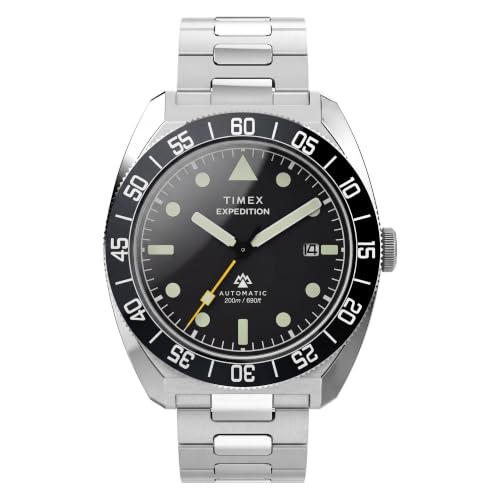
Five cheap watches built to be abused, and the popular one that isn't.
Top pick
Timex Expedition Pioneer Automatic 41mm TW2Y87400
Keep Score 8.0/10
#ad Affiliate link · Price as of October 23, 2026

Are cheap watches worth it?
The cheap watches worth buying, and how to spot the disposable ones.
Top pick
Seiko 5 Sports SRPD55
Keep Score 8.0/10
We earn nothing on this link. Seiko sells it directly.
Is affordable luxury worth it?
What the step up buys, what it costs to keep, and five watches that earn it.
Top pick
Seiko Prospex SPB453J1
Keep Score 9.6/10
We earn nothing on this link. Seiko sells it directly.
| Tier | The honest summary | Best use of the money |
|---|---|---|
| Under $100 | Quartz, mineral glass, 30-50m, one-year warranties. Nothing here is built to be kept. | A beater, a strap toy, or a first watch for someone who will lose it |
| Under $200 | The first tier with genuinely keepable watches: solar, sapphire and 100m all appear | A solar field watch. No batteries, no service, decades of use |
| Under $300 | Real mechanical watches with named, serviceable calibers and published service prices | Your first automatic, if you want one |
| Under $500 | Sapphire becomes normal, 200m becomes normal, three-year warranties appear | The value peak of the entire category, and it is not close |
| Under $1,000 | Swiss movements, 70-80 hour reserves, antimagnetic hairsprings, published accuracy | A watch you will still want in 2046, if that is worth the premium to you |
| Under $2,000 | 300m ratings, in-house finishing, bracelets and clasps that justify themselves | Pleasure. Be honest that that is what you are buying. |
Do you want a mechanical watch, or do you want a watch? If mechanical, the floor is about $150 and the sweet spot is $250-450. If you just want something excellent that runs, a solar quartz at under $200 will outlast most of the mechanicals here with no servicing at all, and there is no shame in that — it is arguably the more buy-it-for-life answer.
How long is "forever" to you? If it means ten years, almost anything above $200 with sapphire and 100m will manage it. If it means passing it on, the specifications that matter are parts availability and crystal, and both are largely solved by about $400. Everything past that is comfort and finish.
Buying at the top of your budget for the case and the dial, and discovering afterwards that the movement has no published service price, the crystal is mineral, or the bracelet is integrated so no strap will ever fit. All three are visible on the manufacturer's own specification sheet before you buy, and all three are exactly what we score.
The other one: spending $800 on a watch rated 30m because it looks best under a cuff, then wearing it every day. That watch is fine on a wrist that also owns something waterproof. As an only watch it is a slow-motion water-ingress claim.
$300-500, on the specifications. That range reliably gets sapphire, 100-200m water resistance, a named serviceable caliber with a published service price and a three-year warranty. Above it, the durability improvements are marginal; below it, you are usually giving up the crystal.
Not on anything measurable about longevity. It typically buys a longer power reserve, a published accuracy tolerance, better finishing and a Swiss movement. It rarely buys a watch more likely to still be running in thirty years.
As a beater or a first watch, yes. As a watch to keep, no — that tier is mineral glass, 30m ratings and one-year warranties that typically exclude the crystal, the strap, the case and the battery. We say so plainly on that page.
If you are buying mechanical, yes, and it changes the answer. Three-yearly servicing at $176 a time is roughly $1,170 over twenty years — often more than the watch. A solar quartz avoids that entirely, which is why it appears so high on our lists.
Every specification and figure on this page came from one of these documents. Where a manufacturer does not publish something, the page says so rather than filling the gap.
Published service intervals and prices, computed over 10 and 20 years. The number nobody else publishes.
Every automatic tier from under $200 to under $2,000, plus servicing costs and how long they last.
The criteria for a forty-year watch, then eight that meet them. The flagship page here.