Skip to content
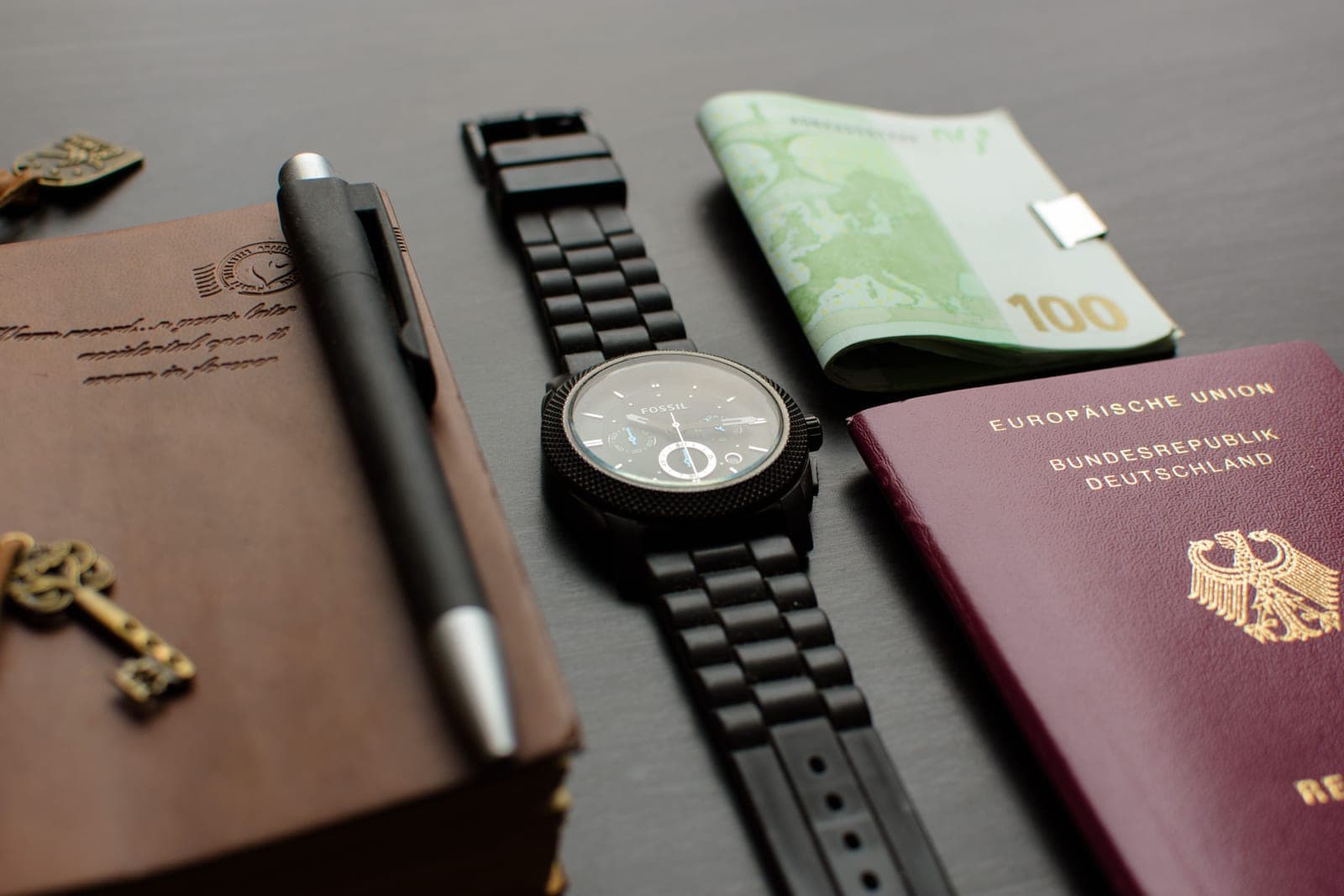
A wristwatch photographed against an airport departure board

GMT

GMT watches

A second time zone on a 24-hour hand. Genuinely useful if you live across time zones, and honest decoration if you don't.

A GMT watch adds a fourth hand that goes round once every 24 hours instead of every 12, read against a 24-hour scale. Set it to a second time zone and you can see, at a glance, whether it is a reasonable hour to call someone. That is the whole feature and it is a good one.

Until 2022 a mechanical GMT effectively started around $2,000. Then Seiko put the 4R34 into the 5 Sports line and the entry price collapsed to a few hundred dollars, which is why this category is suddenly worth writing about at all.

Caller versus flyer — the distinction that matters

This is the one piece of jargon in the category and it decides whether the watch suits you.

  • Caller GMT (also "office GMT"): the local hour hand is fixed to the movement and you set the 24-hour hand independently. Perfect if you stay put and track a zone somewhere else. Seiko's 4R34 is a caller.
  • Flyer GMT ("true GMT"): the local hour hand jumps in one-hour steps independently, so on landing you push the crown, click the hour hand to local time and the reference zone keeps running. Perfect if you are the one moving. These are meaningfully more expensive.

Most people buying a GMT are callers who have been sold the idea that they need a flyer. If you have family two time zones away and fly twice a year, a caller is the right watch and it costs a fraction as much.


Every page in this section

Start here

What to look for in a GMT

  1. Which mechanism it is. Caller or flyer, and whether the price you are paying reflects the one you actually need.
  2. A readable 24-hour scale. On a bezel is easiest to read and lets you track a third zone; on a rehaut is cleaner and harder to read at a glance. Seiko's SSK001 puts it on a rotating bezel, the SSK023 on a fixed one.
  3. Dial busyness. A GMT hand plus a date plus a running seconds hand is a lot of dial. Look at a photograph at actual size before deciding.
  4. Lug-to-lug, as always. The SSK001 is 42.5mm and 46mm lug-to-lug; the SSK023 is 39.4mm and 47.9mm. The narrower watch is the longer one, which is exactly why diameter is the wrong number to shop by.
  5. The crystal. Seiko's entry GMTs are Hardlex, which is the clearest place the price is saved. It is not a dealbreaker; it is worth knowing.

Mechanical or quartz

Quartz GMTs exist and cost far less — the Q Timex GMT is a 38mm steel watch with an acrylic crystal that will do the job for a fraction of the price and cost almost nothing to keep running. If the second time zone is the point rather than the mechanism, that is a genuinely sensible purchase, and it is on our under $500 GMT page for that reason.

The argument for mechanical is the argument for mechanical everywhere: it can be rebuilt indefinitely, and Seiko publishes what that costs. A 4R34 sits in the same $176 service band as the rest of the 4R family, which makes an entry mechanical GMT one of the cheapest complications on this site to keep running.

Who should skip this category entirely

If you do not have a specific second time zone in mind right now, you will not use the hand, and a GMT is then just a busier dial and a slightly thicker case than the three-hand version of the same watch. That is a fine reason to buy — dials are allowed to be enjoyable — but it is not the reason the marketing gives, and it is worth being clear with yourself about which one applies.

Questions people actually ask

Are GMT watches useful?

If you regularly need to know the time somewhere else — family abroad, colleagues in another zone, frequent flights — genuinely yes, and more conveniently than a phone because it is already on your wrist. If you do not, the hand becomes decoration.

What is the difference between a caller GMT and a flyer GMT?

On a caller, the 24-hour hand is independently adjustable and the local hour hand is not, which suits someone tracking a distant zone from home. On a flyer, the local hour hand jumps in one-hour steps, which suits someone who is themselves traveling. Flyers cost considerably more.

Is a Seiko 5 Sports GMT a real GMT?

Yes — the 4R34 drives a genuine, independently settable 24-hour hand. It is a caller rather than a flyer, which is the honest distinction, and for most buyers it is the mechanism they actually want.

Do I need a mechanical GMT?

No. A quartz GMT does the same job for less money and almost no running cost. Buy mechanical if you want a rebuildable movement and are happy with the servicing that implies; Seiko's 4R34 sits in the $176 service band.

Sources

Every specification and figure on this page came from one of these documents. Where a manufacturer does not publish something, the page says so rather than filling the gap.