Buying guides
Watch straps
The cheapest way to make one watch feel like three — and the one specification that quietly decides whether you can.
By Sawyer V. · Published
The short answer
Find your lug width first — it is the gap between the lugs in millimeters, and 18, 20 and 22mm are the standard sizes with effectively unlimited choice. Odd widths like 19 and 21mm cost more and stock less. An integrated bracelet, under about 16mm, means no strap will ever fit.
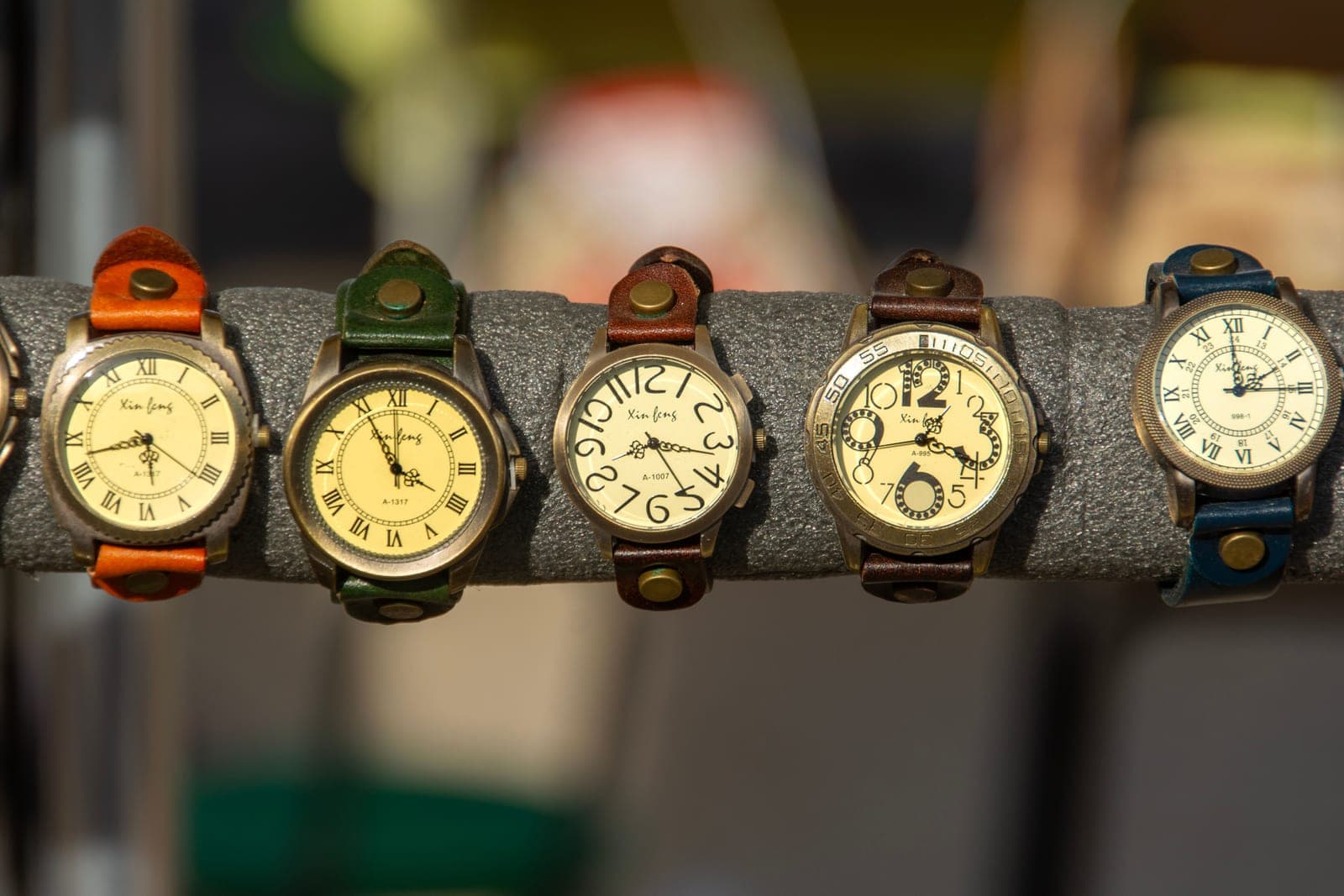
A strap change is the cheapest meaningful thing you can do to a watch. It costs less than dinner, takes five minutes, and genuinely changes what the watch is for — the same case on a steel bracelet, a leather strap and a nylon band reads as three different objects.
It also matters more than it sounds for a watch you intend to keep, because the strap is the one component guaranteed to wear out. A watch whose strap can always be replaced outlives one whose cannot, regardless of what is inside either.
Find your lug width first
Lug width is the gap between the lugs, measured in millimeters, and it is almost always an even number. Every manufacturer that publishes specifications properly lists it — we print it on every watch on this site, and print "not published" where they do not.
| Width | Availability | Found on |
|---|---|---|
| 18mm | Excellent | Citizen Chandler, Timex Field Post Solar, Q Timex GMT |
| 20mm | The best supported width there is | Hamilton Khaki Field, Baltic Aquascaphe, most Seiko 5 Sports in 39mm |
| 22mm | Excellent | Seiko Turtle, Seiko SRPD55, Orient Kamasu |
| 19mm / 21mm | Limited — stocked, but fewer options and higher prices | Tissot Le Locle (19mm), Tissot Gentleman and several Orient Bambinos (21mm), Seiko Speedtimer (21mm) |
| Under 16mm | None. This is an integrated bracelet, not a strap size | Citizen Tsuyosa (9.1mm), Tissot PRX (12mm) |
Quick release, and why it changes behavior
A quick-release spring bar has a small lever on the underside. Pull it with a fingernail and the strap comes off — no tool, no scratched lugs, about fifteen seconds a side.
The practical effect is that people who own quick-release straps actually change them, and people who need a spring bar tool mostly do not. Tissot fits quick release to the Gentleman's bracelet; Hamilton fits its Easy Click system to several Khaki Field references. If your watch does not have them, quick-release spring bars in your lug width cost very little and can be fitted to almost anything.
Materials, for a watch you intend to keep
| Material | Lasts | Best for | Watch out for |
|---|---|---|---|
| Steel bracelet | Decades, if the clasp is decent | Divers, everyday wear | Adds 60-100g; stretches at the pins over many years |
| Leather | 2-5 years with daily wear | Dress and field watches | Water destroys it — sweat as much as swimming |
| Nylon / NATO | Years, and costs almost nothing to replace | Field watches, summer, anything near water | Adds thickness under the case, which lifts the watch |
| Rubber / silicone | Years | Divers, sport, hot climates | Attracts dust; cheap ones stiffen and crack |
| Sailcloth / canvas | Years | Sports watches worn dressier | Quality varies enormously between makers |
For a watch you plan to own for decades, the honest recommendation is to buy one good bracelet or strap and one cheap nylon, and stop there. Leather is the material that will need replacing most often — sweat degrades it faster than water does — and treating it as a consumable rather than a permanent fitting is the right frame. Our leather strap roundup compares five of them on tannery, lining and buckle grade, and the spring bars that hold any of them on are a consumable too.
The integrated bracelet question
A watch with a lug width under about 16mm does not take straps. The bracelet is shaped to the case and is structurally part of the watch — Citizen's Tsuyosa lists 9.1mm and Tissot's PRX 12mm.
These are often superb-looking watches and the design is the point. But it is worth being clear about what it commits you to: one supplier, one part, for the life of the watch. Bracelets stretch, clasps wear, and a discontinued model-specific bracelet is not something an independent can improvise. On a ten-year watch this is a non-issue; on a forty-year one it is the reason both watches lose points on this site.
Changing a strap without damaging the watch
- Work on a soft cloth, not a hard desk. A slipped spring bar tool takes a chunk out of a lug, and lug scratches are the hardest kind to polish out.
- Use a proper spring bar tool — a forked end for prying, a pointed end for pushing through drilled lugs. A butter knife is how lugs get scratched.
- Compress one side, angle the bar out, then the other. Do not force it straight out; you will bend the bar.
- Check the fit before you let go. A spring bar that has not seated properly in both lug holes will release later, usually at the worst moment.
- Replace spring bars every few years if you swim in the watch, and always use the correct thickness — divers use heavier bars than dress watches for a reason.
Questions people actually ask
How do I know my watch strap size?
Measure the gap between the lugs in millimeters, or look up the reference on the manufacturer's specification page — most publish it. It is almost always an even number: 18, 20 and 22mm are the common sizes.
What is a quick release strap?
A strap with a small lever on the spring bar that lets you remove it with a fingernail, no tool and no risk of scratching the lugs. It takes about fifteen seconds a side and is the single reason people who have them actually change straps.
Are silicone watch straps any good?
Good ones are comfortable, waterproof and last years. Cheap ones stiffen and crack, and all of them attract dust and lint. For a watch that goes in water regularly they are the most practical material there is.
Can I put a strap on a watch with an integrated bracelet?
No. A lug width under about 16mm means the bracelet is shaped to the case and no aftermarket strap will fit. That is a permanent constraint, and worth understanding before buying rather than after.
How often should I replace a leather strap?
Every two to five years with daily wear. Sweat degrades leather faster than rain does, which is why a leather strap on a watch worn every day in summer will not last as long as you expect.
Read next
Best NATO straps
Four military-pattern straps compared on nylon thickness, steel grade and length.
Best watches for small wrists
Eight watches under 48mm lug-to-lug, with the measurement that actually decides fit.
Field watches
Legible, 36-41mm, tough — the style that dates least. Picks under $300 and in automatic.
How we pick
The Keep Score formula in full: six specs, fixed weights, all of it checkable.